
I felt that the literature (at least online) on the multi-sport consumer topic was somewhat lacking. We often discuss the hybrid athlete, the cross-trainer, or the outdoor lifestyle consumer, but we rarely pause to understand what’s truly driving this shift — and what it means for brands in sports, outdoor, and fitness. It’s not just that people are doing more than one sport. The deeper story is that they are changing the way they identify as athletes and consumers. This has massive implications for how brands design products, structure marketing funnels, and communicate values.
What Does “Multi-Sport” Really Mean?
According to the Cambridge Dictionary, “multi-sport” means taking part in or involving several sports.
It’s a simple definition — maybe too simple. Sundried, a sportswear brand, describes it more precisely as “the umbrella term used for a family of endurance races consisting of two or more sports.” But the modern meaning is broader than both. Today, multi-sport is a lifestyle category, not just an event format.
People aren’t necessarily competing in triathlons or duathlons. They’re training, exploring, and switching contexts across different activities — depending on weather, season, or mood. A trail runner might do yoga to recover, ride gravel on Sundays, and hit the climbing gym on rainy days. A cyclist might take up skiing or running in winter to stay fit. The line between performance, fitness, and outdoor exploration is fading. The multi-sport consumer doesn’t see sports as separate worlds — they see them as connected experiences.
A Personal Observation: My Friends as a Mirror
I started taking notes for this article after watching my own group of friends. We all met through a “main sport” — cycling, running, climbing, snowboarding — but over time, I noticed how everyone’s practice evolved. The goal wasn’t to quit one sport and start another; it was to expand their identity through new forms of movement. A few examples that might sound familiar:
- Ruben: a trail runner at heart. But before that, a snowboarder (he sold me his old board). He’s now mixing CrossFit, lunch-break road runs, and some occasional gravel rides. When the weather turns cold, he moves his bike onto the indoor trainer and keeps going. His training is fluid — not seasonal, but adaptive.
- Enrico: an ultra-runner who spends his winters doing skialp. He loves the endurance mindset, regardless of the medium. For him, it’s less about running per se and more about the feeling of moving uphill under his own power — on foot, on skis, or on two wheels.
- Chiara: probably the perfect definition of multi-sport. She runs, bikes, hikes, climbs, and trains in the gym. Her gear overlaps — the same jacket works for hiking and commuting, the same hydration vest is used for trail runs and long rides. She doesn’t separate her sports life into compartments; it’s one big, evolving ecosystem.
When I talk to them, none of them says, “I’m a cyclist” or “I’m a runner.” They say, “I love being outdoors” or “I just like moving.” That’s a big cultural shift. This pattern mirrors what I’ve already observed in local running and cycling circles — where communities overlap, and people switch sports depending on the season or social influence.
The Cultural Context: Movement as Identity
For previous generations, sports were identity markers: you were a runner, a cyclist, a football player. Sports communities built their culture around specialization — the equipment, the rituals, the language. But younger audiences, and even many long-time athletes, now see movement as something more fluid.
The rise of remote work, the popularity of holistic fitness, and access to digital training platforms have all contributed to this change.
This consumer doesn’t want to specialize — they want versatility. They build their identity not around one sport but around the habit of moving. And that shift is visible everywhere — in the gear people buy, the way they train, and the content they consume.
The Data: Insights from Sports Tracking Apps
Working with Strava, Komoot, and Outdooractive gave me an inside look at how this trend is evolving in data form. I’ve written before about how Strava has become more than a tracking tool — it’s a powerful marketing and brand-building channel in itself. Each platform captures different dimensions of multi-sport behaviour:
- Strava shows training diversity: users switching between running, cycling, and indoor workouts across seasons.
- Komoot reflects outdoor exploration: the same users planning cycling routes in summer and hiking trips in autumn.
- Outdooractive connects tourism and sport, with users mixing hiking, ski touring, and trail running based on location.
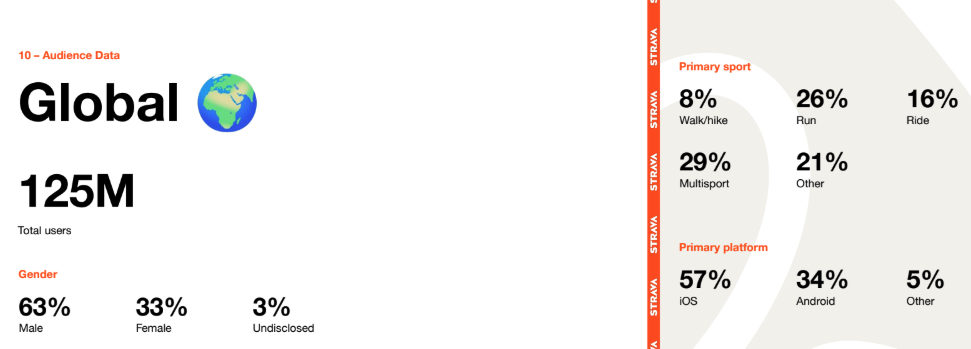
In 2024, Strava shared an internal presentation highlighting that the primary sport is “multi-sport” for 29% of the 125 million users in 2024. Cross-sport content (e.g., a cyclist trying a trail run) could generate higher interaction than single-discipline posts.
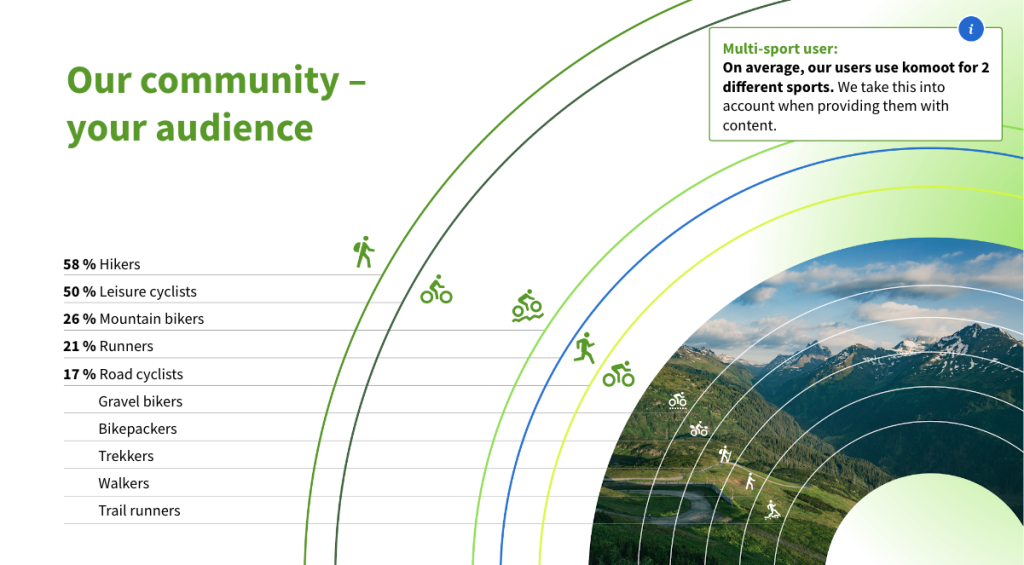
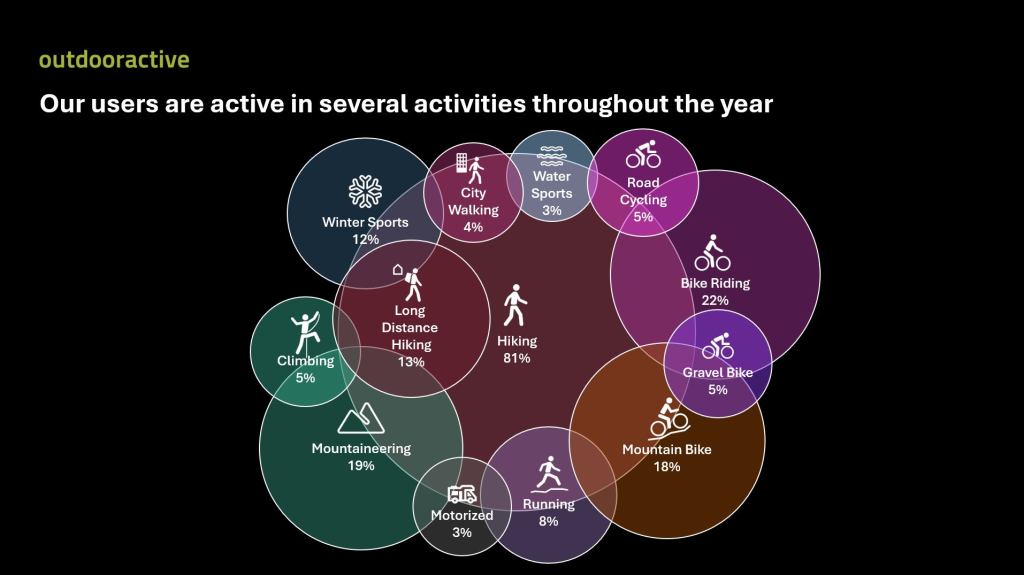
Komoot shared that “on average our users engage in two different sports on the platform,” while an Outdooractive slide shows notable cross-interaction between hiking as a main sport and activities such as mountain biking, cycling and water sports.
What’s interesting for brands is how these users behave digitally. They aren’t looking for one app, one training plan, or one brand — they build their own ecosystem of digital and physical tools that adapt to their needs. This makes them harder to define in CRM databases — but far more valuable when understood.
The Multi-Sport Mindset and Athletes
The movement is also visible among professional athletes and creators.
- Valtteri Bottas, F1 driver, found a second life as a gravel cyclist — and now races at events like the SBT GRVL.
- Tom Dumoulin, a former pro cyclist, transitioned into running, completing marathons at elite times.
- André Schürrle, World Cup-winning footballer, now competes in ultramarathons.
- Jorge Martin, MotoGP racer, trains extensively on the bike — often posting more cycling than racing content.
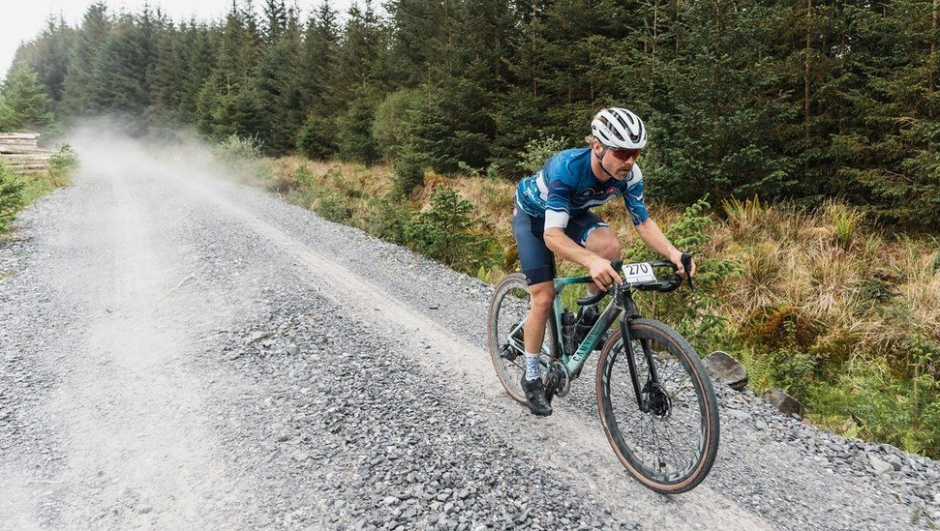
These examples matter because they influence perception. When a Formula 1 driver rides gravel or a footballer runs an ultra, they permit fans to try something new. They normalise the idea that it’s cool to move between sports — not just to stick to one. That’s powerful branding influence, even if it’s not always intentional.
What About Brands?
Some brands have already picked up on the signal — others haven’t.
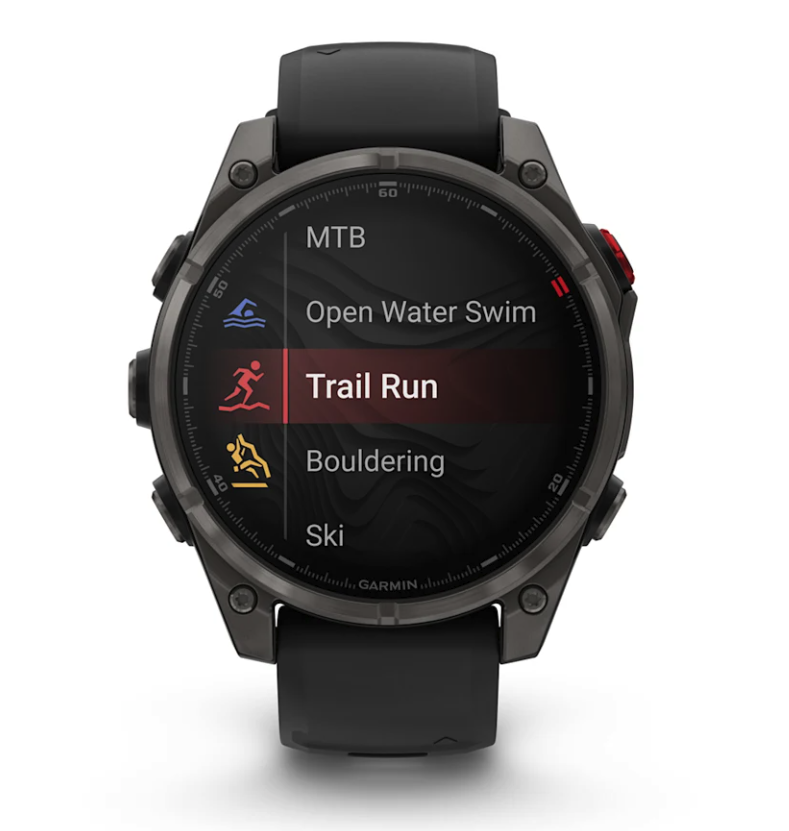
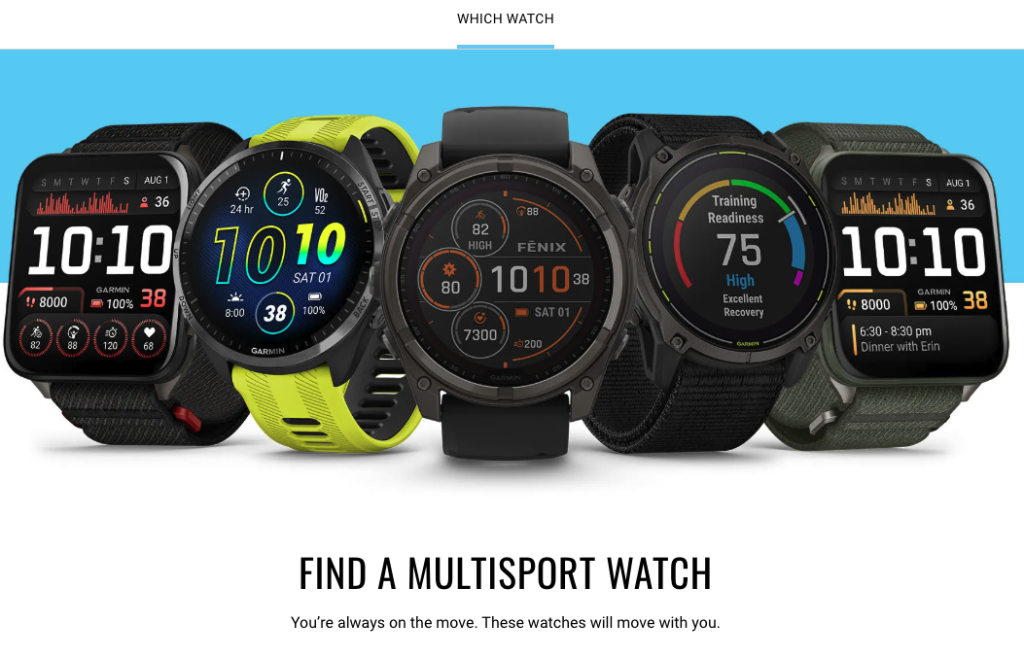
- Garmin embraces the concept at the product level — their “Find a Multisport Watch” section literally builds the consumer journey around this identity.
- On Running, Salomon, and Patagonia are also telling stories of movement, outdoor versatility, and mindful performance, rather than single-sport mastery.
- And even Buycycle, the cycling marketplace, is expanding beyond its original niche: in 2025, it added two new categories — Running and Winter Sports — a clear signal that marketplaces, too, are following consumers as they move between disciplines.
- Rudy Project promotes versatility by positioning the same eyewear frame for different sports, changing only the imagery and copy.
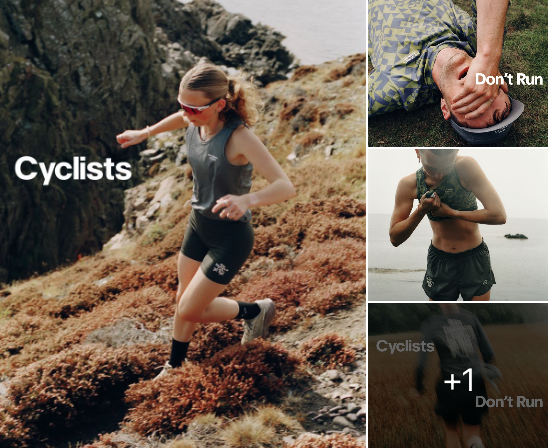
And one of my favourite recent campaigns comes from PAS Normal Studios. Their “Cyclists Don’t Run” campaign starts with irony and ends with truth. The campaign acknowledges the myth of single-sport purity, then flips it. It celebrates the idea that cyclists do run — and that balance between disciplines is part of being an athlete today.
“Cyclists don’t run. Cyclists shouldn’t run. It hurts. You end up injured. Battered. Sore. Any time not riding a bike is best spent with your legs up, resting. Of course, we all know that that’s not true. That’s why we’ve created our Balance collection.”
This isn’t a coincidence. It’s a recognition that the lines between sports are blurring — in the way people train, buy, and talk about gear.
However, many brands still build campaigns, e-commerce navigation, and retail layouts around strict sport categories. That logic made sense ten years ago, when communities were built around single-sport identities. Now it risks missing how real people move through their year — and through their purchases.
A cyclist might be shopping for a GPS watch for running.
A runner might need a wind jacket that also works for hiking.
A hiker might start cycling next summer.
Every marketing funnel that assumes a single-sport identity risks missing these natural transitions — and the lifetime value they generate. If your brand (or marketplace) isn’t designed to follow that natural transition, someone else will capture that value instead.
Why the Multi-Sport Consumer Matters in 2025 (and Beyond).
Understanding the multi-sport consumer is not a trend report. It’s a lens through which brands can redesign their entire relationship with the athlete. Let’s break down a few strategic implications:
- Product Design and Materials
Multi-sport means designing for adaptability.
Can a t-shirt work for yoga, trail running, and strength training? Can a lightweight jacket work for both hiking and cycling commutes? The answer depends on modular design, material intelligence, and fit versatility. - Brand Narrative and Community
Multi-sport athletes identify with movement, not with a discipline.
Brands should speak the same language — focusing on energy, exploration, and experience rather than specialisation. A campaign that celebrates “Every way you move” might resonate more than “For runners, by runners.” - Digital Experience and CRM
Tracking multi-sport users requires cross-category thinking.
If someone logs both rides and gym sessions, your emails and ads shouldn’t segment them into one group. Instead, brands could use dynamic content to reflect seasonal shifts and training context — like offering a winter skimo bundle to cyclists who upload indoor trainer sessions. - Retail and Merchandising
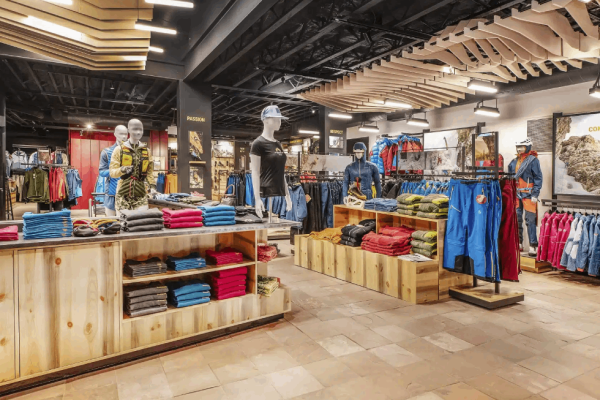
Imagine walking into a store where products are arranged by purpose (Outdoor, Endurance, Recovery) rather than by sport.
That’s already happening in some forward-thinking retailers — and it aligns perfectly with how multi-sport consumers think. - Sustainability and Longevity
A multi-sport wardrobe reduces waste.
Consumers are already reusing gear across disciplines, driven by cost awareness and environmental values. Designing versatile, durable pieces is both good business and good ethics.
This evolution is part of a broader cultural transformation. The modern athlete isn’t a specialist — they’re a mover. They seek variety, balance, and a connection with their environment. They train not only for performance but for curiosity and mental health. And that’s why the multi-sport mindset matters: it mirrors how people want to live — adaptable, dynamic, and less defined by categories.
Final Thought
Understanding the multi-sport consumer isn’t just about knowing that people do more than one sport — it’s about recognising a new way of living movement. The shift isn’t technical; it’s cultural. It changes how people talk about themselves, how they shop, and how they expect brands to show up.
The smartest brands — from PAS Normal Studios’ ironic honesty to Garmin’s product logic and Buycycle’s marketplace expansion — are already translating this mindset into communication and design. They don’t just sell across sports; they speak the language of versatility, curiosity, and self-discovery.
For marketing and digital professionals, this means something deeper. In an era defined by multiple touchpoints, channels, and identities, brands can’t afford to communicate in silos. Campaigns, content, and commerce experiences should all reflect the real rhythm of consumers who ride, run, climb, and recover — sometimes all in the same week. Integrating the multi-sport message into brand strategy isn’t about chasing a trend; it’s about aligning with a lifestyle that already exists. Understanding it — and communicating through it — can help brands thrive in the modern, multi-touchpoint era, where flexibility and authenticity are the real currencies of connection. The same principles apply to digital ecosystems: every touchpoint can tell a part of the story.
Actions after reading
If you need advice, please contact me. I’d be happy to help. Email: andreafagandigital@gmail.com.
Side notes, credits, sources
Articles: Cambridge Dictionary, Sundried.
Images: Gazzetta.it, Garmin.it, Garmin.it, LinkedIn.com, Lavocedelnordest.eu.